
brand@landivine.com
order a call


China is the country with the richest seabuckthorn resources, which are mainly distributed in Inner Mongolia, Altay, Xinjiang, Shaanxi and Gansu. Driven by the “One Belt, One Road” initiative, China’s sea buckthorn products’ export value will reach US$320 million in 2024, a year-on-year increase of 45%. Among them, high-end products such as sea buckthorn seed oil and sea buckthorn fruit oil account for 58% of total exports, and are mainly sold to high-end markets such as the European Union, Japan and South Korea.
“Liquid Gold”-Sea Buckthorn Oil. Sea buckthorn fruit is known as the “King of Vitamin C”. The vitamin C content in 100g of fresh sea buckthorn fruit reaches 800-1100 mg, which is 245 times that of apples. This makes sea buckthorn fruit oil have excellent antioxidant, skin brightening and immunity-enhancing effects. The team of Professor Li Li of Beijing Technology and Business University found that the ratio of linoleic acid and linolenic acid in sea buckthorn seed oil is close to the natural ratio of the two fatty acids in the human body’s own lipids, which can effectively replenish the missing lipids in the skin, thereby repairing the damaged skin barrier. Since ancient times, sea buckthorn seed oil has been used to treat burns, scalds, frostbite and various skin ulcers.
Sea buckthorn oil accounts for a large share of registered cosmetics due to its excellent antioxidant and repairing effects, and is a hot topic that many cosmetics manufacturers are chasing. Sea buckthorn oil is widely loved, but it has many problems such as poor stability, easy oxidation and rancidity, and a relatively thick texture when used in cosmetics, which limits its industrial application. Microencapsulation technology is an effective strategy to improve its stability, but it has bottlenecks such as drying, low encapsulation efficiency, and insufficient protection. Through research, the team of Professor Li Li of Landivine Research Institute evaluated and established for the first time the optimal process conditions for preparing sea buckthorn oil microcapsule emulsion by the composite coagulation-high-pressure homogenization method, achieving efficient and stable encapsulation of sea buckthorn oil, and providing innovative solutions for long-term stable storage and water-soluble addition of highly active functional oils.
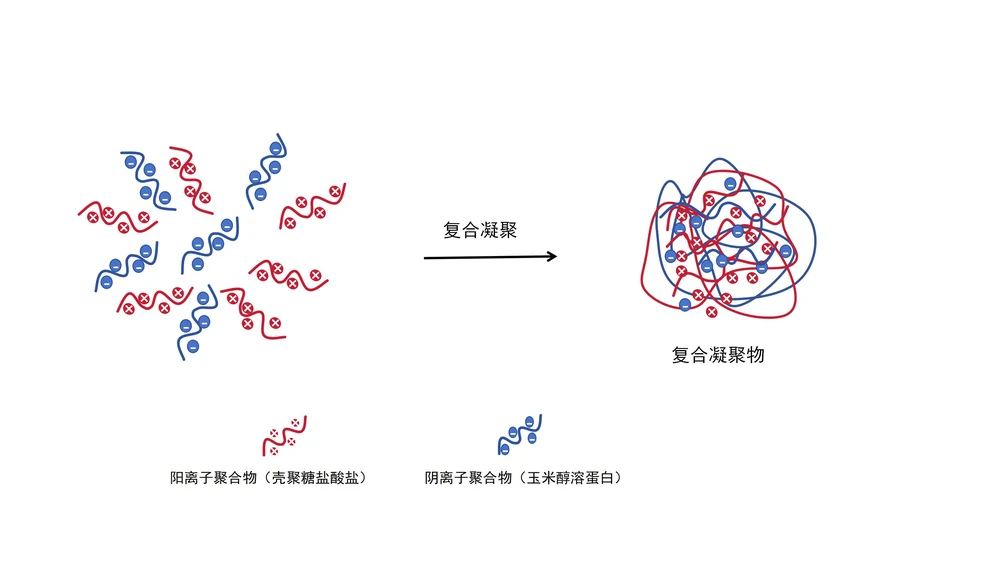
The sea buckthorn oil microcapsule emulsion, which is firmly encapsulated by anionic and cationic wall materials, has excellent storage stability and can effectively slow down the oxidative rancidity of oil and extend its shelf life by nearly three times.
In addition, microencapsulation enables slow, controlled and effective release of active ingredients. In cosmetics and other external products, wall materials with good biocompatibility can promote the transdermal absorption of sea buckthorn oil and maintain a relatively stable release rate, avoiding problems such as rapid release on the skin surface immediately after use, resulting in excessive local concentration and shortened effective action time. When used internally, microencapsulation can reduce the direct stimulation of sea buckthorn oil to the gastrointestinal tract, release it slowly, and prolong its action time in the body so that it can be better absorbed by the body.
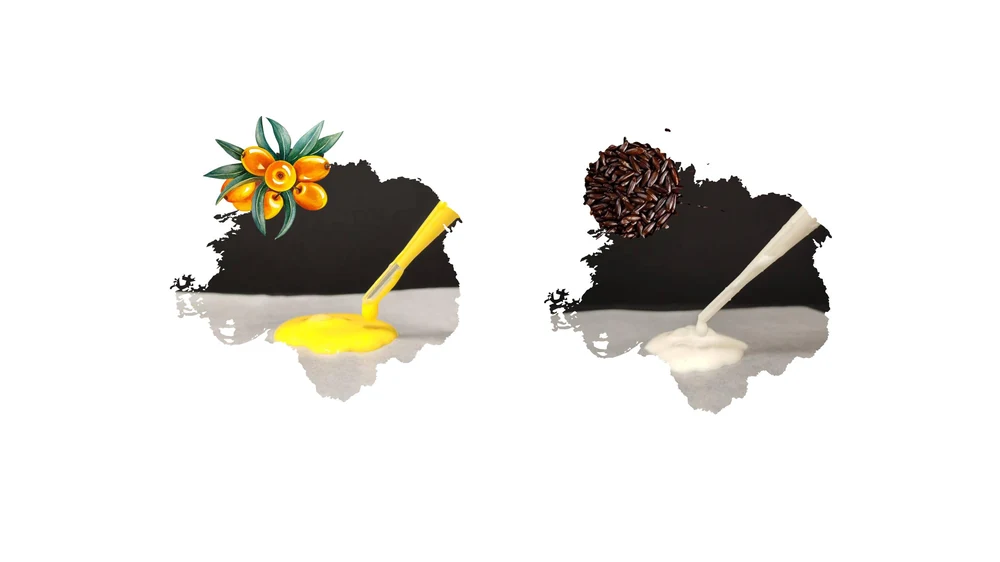
Breaking through the limitations of traditional oil preservation, sea buckthorn oil:
Breaking through the traditional microcapsule preparation process, sea buckthorn oil microcapsules:
This technological achievement has obtained a national invention patent and a Beijing Internet+ competition award. It provides an innovative solution to the bottleneck problems of sea buckthorn oil being easily oxidized, difficult to store, and having a thick texture when used in cosmetics. It is of great significance in promoting the high-value development of characteristic plant resources and assisting the widespread application of sea buckthorn resources.
Previous News
Professor Li Li’s Team at Landivine Resea...Next News
Landivine Research Institute and Beijing Techno...